
Healthcare professionals require central venous access (access to a major vein) for several reasons, including the administration of medications, the insertion of catheters and the frequent drawing of blood. There are many devices that can be used to enable ongoing central venous access, known as Central Venous Access Devices (CVADs). The most suitable device is determined based on the patient’s condition and the healthcare professional’s requirements.
Types of Central Venous Access Device
Infus-a-port is an implanted CVAD that sits beneath the skin. This device is suitable for long-term use (more than one year) and is frequently required for the administration of chemotherapy in cancer patients. It is accessed through the skin using a special needle when treatment is needed, and is not visible or felt when not in use.
Hickman catheter is a tunnelled CVAD that is suitable for shorter-term central venous access. Unlike the Infus-a-port, the Hickman line exits through the skin and can be used without a needle, making it practical for patients who require frequent blood draws or medication administration.
All central venous access devices are inserted under imaging guidance to ensure accurate placement and minimise the risk of complications. Dr Garbowski and the team at Perth Vascular Clinic are experienced in the full range of CVAD insertion procedures.
Related Resources
Below are some of the Resources related to Central Venous Access.

Listen to the Latest Podcast
Listen to the latest podcast featuring Dr Marek Garbowski and Medical Forum, WA’s independent monthly publication for health professionals.
Get in Touch
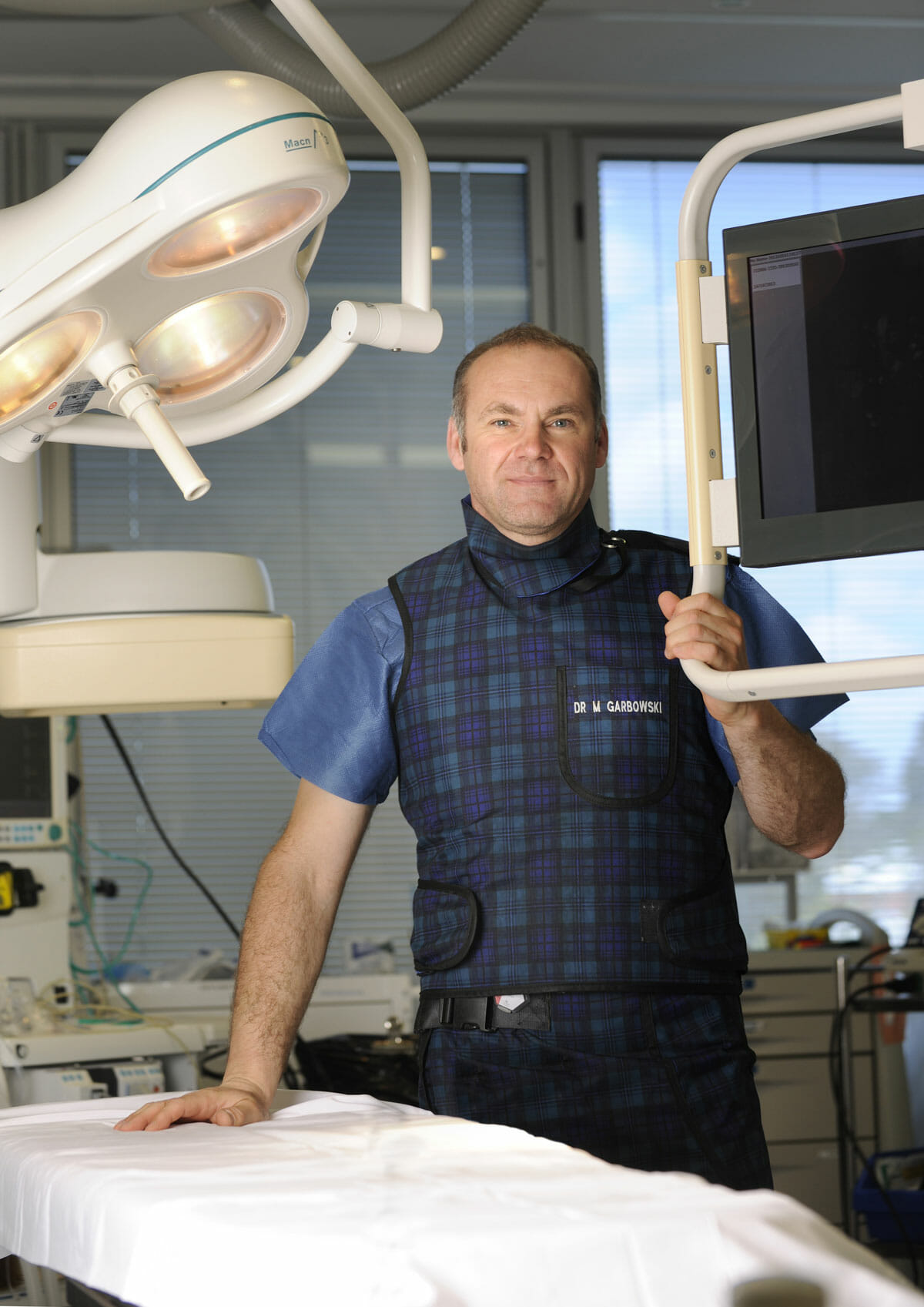
Why Choose Perth Vascular Clinic?
Expertise You Can Trust
Dr Marek Garbowski has developed a strong clinical focus in the assessment and management of pelvic venous disorders, helping many women regain control of their lives after years of unexplained symptoms.
State-of-the-Art Assessment
Using the latest diagnostic imaging and vascular evaluation techniques, we ensure a thorough and accurate diagnosis. We work closely with gynaecologists and radiologists to deliver a multidisciplinary approach tailored to each patient’s needs.
Evidence-Based Treatment Options
Our clinic offers a full range of minimally invasive, image-guided treatment options — including embolisation of varicose pelvic veins, designed to relieve symptoms with minimal downtime.
Care for Public and Private Patients
Dr Garbowski provides consultations and procedures through both private practice and public hospital pathways, ensuring access to quality care for all patients.
Frequently Asked Questions
Central venous access involves the placement of a catheter into a large central vein to provide reliable long-term vascular access. It is used for chemotherapy, haemodialysis, long-term antibiotic therapy, parenteral nutrition, or frequent blood sampling.