
Patients with a severe case of diabetes-related ulceration may require minor amputation to minimise the infection from spreading to other parts of the body.
The most common amputation in diabetes is toe amputation (minor amputation).
Below knee and above knee amputations (major amputation) are often required to preserve the unaffected bones and tissue in the patient’s leg. This is usually the case in advanced ulceration affecting feet, frequently associated with very poor blood supply where treatment options are very limited or not possible at all.
Patients undergoing amputations are likely to require special preparation. You may be required to reduce or stop taking certain medications leading up to the amputation, to reduce the risk of bleeding or other complications.
Your physical strength, balance and coordination may also be tested prior to the amputation to assess your potential for rehabilitation. If you are going to use an artificial limb following your amputation, you may be required to undergo a fitting to ensure the artificial limb is ready by the time you recover from your operation.
The operation itself involves removing the diseased limb, yet preserving as much healthy skin, blood vessel, and nerve tissue as possible.
When the anaesthesia has taken effect, the surgeon makes an incision into the skin, leaving enough healthy skin to cover the stump for healing. Major blood vessels are clamped to minimise bleeding, and nerves are protected while the operation is carried out.
The surgeon may shape the muscles to create a comfortable contour for your artificial limb (if required), and when the surgeon is satisfied that the diseased tissue has been successfully removed, they will stitch the blood vessels and remove the clamps to ensure that all bleeding points are secure.
Depending on the severity of the infection, the surgeon may leave the site open for several days to allow the surgical team to clean and eradicate the infection. This is called an open flap amputation.
Closing the skin flaps immediately after the limb has been removed (closed amputation) means the surgeon is confident that the infected tissue has been removed and successful healing is likely.
Your surgical team may place a stocking over the stump to hold drainage tubes and wound dressings in place, or your limb may be placed in traction or a splint, depending on your condition.
You will be required to stay in hospital from 5 to 14 days after your operation, and full healing can be expected in 4 to 8 weeks.
Counselling before and after your amputation is advised to support you through this major life change.
Related Resources
Below are some of the Resources related to Amputations.


Listen to the Latest Podcast
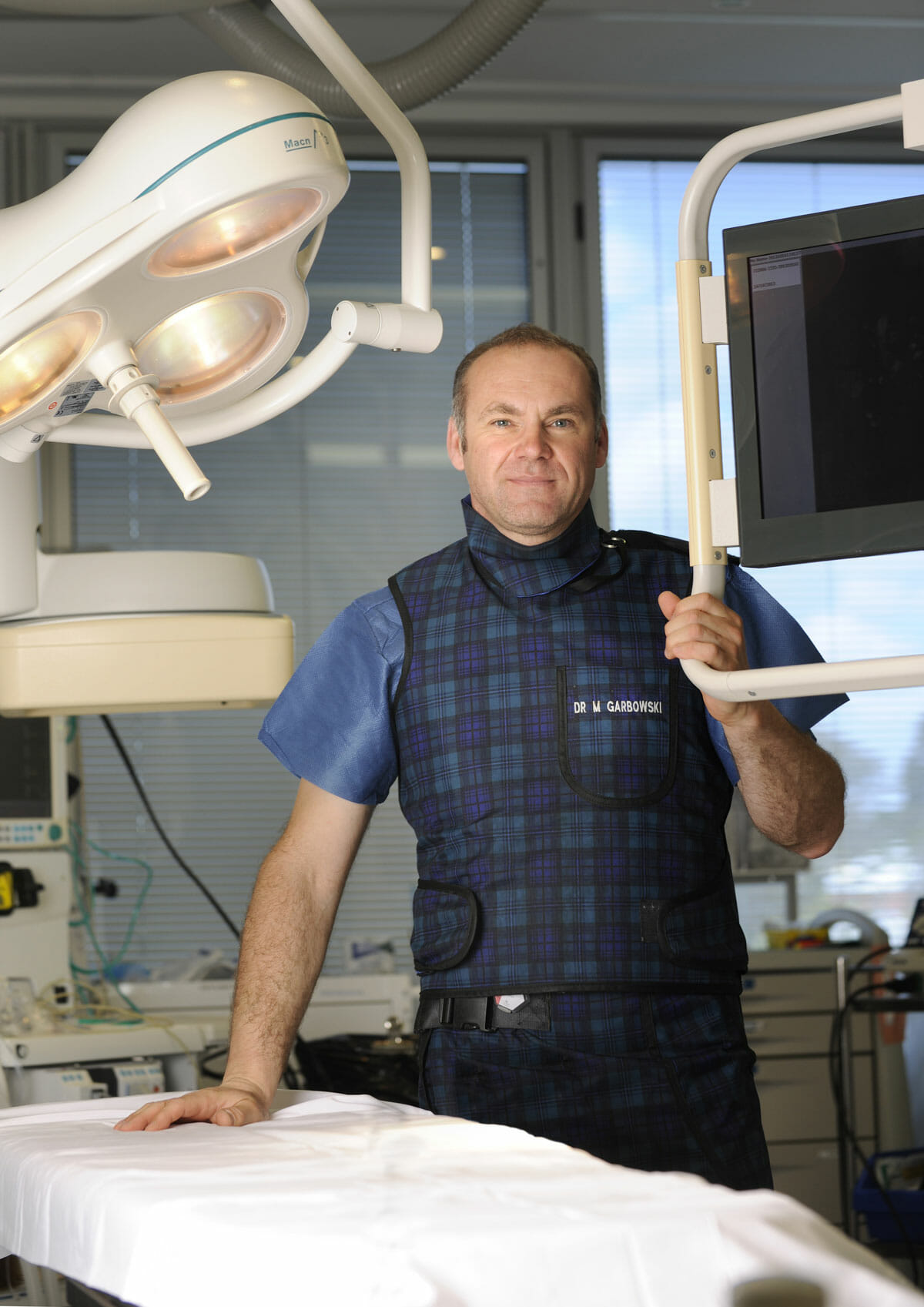
Listen to the latest podcast featuring Dr Marek Garbowski and Medical Forum, WA’s independent monthly publication for health professionals.
Get in Touch
Why Choose Perth Vascular Clinic?
Expertise You Can Trust
Dr Marek Garbowski has developed a strong clinical focus in the assessment and management of pelvic venous disorders, helping many women regain control of their lives after years of unexplained symptoms.
State-of-the-Art Assessment
Using the latest diagnostic imaging and vascular evaluation techniques, we ensure a thorough and accurate diagnosis. We work closely with gynaecologists and radiologists to deliver a multidisciplinary approach tailored to each patient’s needs.
Evidence-Based Treatment Options
Our clinic offers a full range of minimally invasive, image-guided treatment options — including embolisation of varicose pelvic veins, designed to relieve symptoms with minimal downtime.
Care for Public and Private Patients
Dr Garbowski provides consultations and procedures through both private practice and public hospital pathways, ensuring access to quality care for all patients.
Frequently Asked Questions
Amputation may be recommended when a limb cannot be saved due to severe infection, gangrene, critical ischaemia that cannot be revascularised, or significant trauma. The goal is to remove non-viable tissue to preserve life and enable rehabilitation. Every effort is made to avoid amputation through revascularisation when possible.