
What they are
Vascular malformations are abnormalities in the formation of blood vessels or lymphatic channels. They are present from birth, although some are not noticed until childhood or adolescence. They grow in proportion to the child and do not regress on their own. This distinguishes them from infantile haemangiomas, which are vascular tumours that typically shrink over time. Most arise from somatic (non-inherited) genetic changes in genes such as PIK3CA, TEK and GNAQ. A smaller number are inherited, for example in CM-AVM (RASA1, EPHB4).
Main types
Malformations are grouped by the type of vessel involved and by blood flow (ISSVA classification):
- Slow-flow: capillary (port-wine stains), venous, lymphatic, and combined forms such as Klippel-Trénaunay syndrome.
- Fast-flow: arteriovenous malformations (AVMs) and arteriovenous fistulas, where arteries connect directly to veins.
Venous malformations are the most common type seen by vascular specialists.
Symptoms and signs
- Venous malformations are soft, compressible, bluish swellings that enlarge when the limb is dependent or with exertion. They can cause pain, stiffness and small calcified clots (phleboliths).
- Lymphatic malformations are swellings that can become suddenly enlarged and inflamed after infection or bleeding into the cyst.
- Capillary malformations are flat pink to purple skin stains.
- AVMs are warm, pulsatile lesions that may have a palpable thrill or audible bruit. Over time they can cause pain, bleeding, ulceration, tissue destruction and, rarely, heart strain.
- Limb overgrowth, or a difference in limb length or girth, may occur with combined malformations.
Growth may accelerate during puberty, pregnancy or after trauma.
Diagnosis
- Clinical examination is often highly suggestive.
- Duplex ultrasound is the first-line test, distinguishing slow-flow from fast-flow lesions.
- MRI (with MR venography or angiography where needed) defines the extent and the tissues involved.
- Catheter angiography is reserved for planning treatment of AVMs.
- Blood tests (D-dimer and fibrinogen) screen for localised intravascular coagulopathy in extensive venous malformations.
Treatment
Not every malformation needs treatment. Management is individualised and best delivered by a multidisciplinary team.
- Conservative care: compression garments, elevation, activity modification, and anticoagulant or antiplatelet therapy in selected patients.
- Sclerotherapy: injection of a sclerosant into venous or lymphatic malformations.
- Embolisation: used for AVMs, often before surgery.
- Surgical resection: the option when a lesion is well localised. Complete removal offers the best chance of cure for AVMs, but recurrence can occur after incomplete treatment.
- Endovenous ablation: may be appropriate for abnormal veins such as the lateral marginal vein in Klippel-Trénaunay syndrome, once deep vein patency is confirmed.
- Laser therapy: used for capillary malformations.
- Targeted medical therapy: sirolimus, or alpelisib in selected PIK3CA-related conditions, may be used for extensive or complex lesions in specialist settings.
Risks of treatment
Depending on the modality, risks include swelling, pain, skin injury or ulceration, nerve injury, blood clots, infection and recurrence. Multiple sessions are often required.
When to seek review
Refer for specialist assessment if a lesion is growing, painful, bleeding, ulcerating, causing limb-length or girth difference, or limiting function. Warm, pulsatile lesions and those affecting the head, neck or airway need prompt review.
This page provides general information only and does not replace individual medical advice.
Listen to the Latest Podcast
Listen to the latest podcast featuring Dr Marek Garbowski and Medical Forum, WA’s independent monthly publication for health professionals.
Get in Touch
Treatments Available for Vascular Malformations
Below are some of the treatments we have available for Vascular Malformations. Click on the below to learn more or get in touch with us to request a consultation.
Endovenous Laser Ablation (EVLT)
Endovenous laser ablation (EVLT) uses laser energy to close diseased veins from within, eliminating the underlying cause of varicose veins. It is a highly effective day procedure with a fast recovery and excellent long-term results.
Why Choose Perth Vascular Clinic?
Expertise You Can Trust
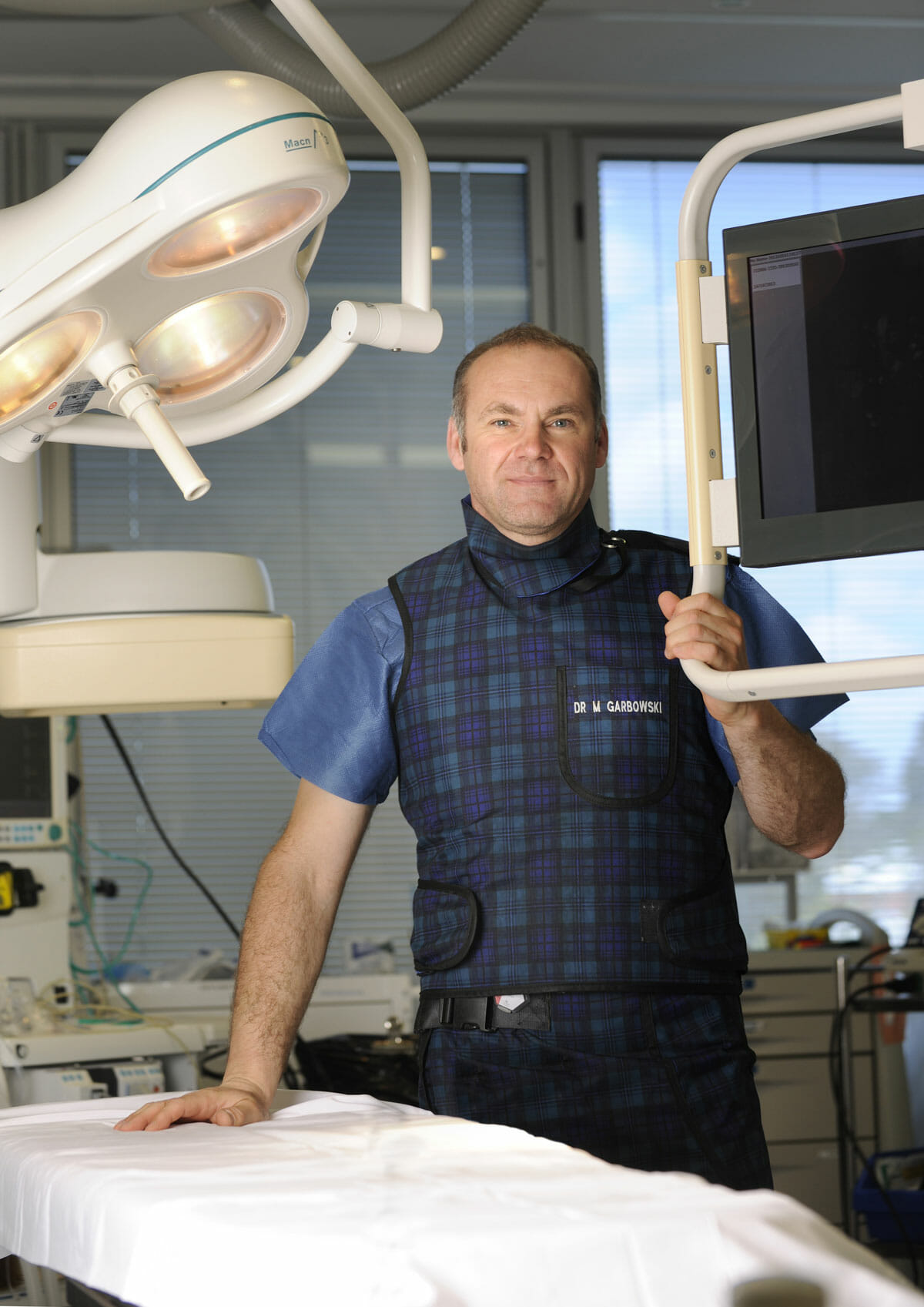
Dr Marek Garbowski has developed a strong clinical focus in the assessment and management of pelvic venous disorders, helping many women regain control of their lives after years of unexplained symptoms.
State-of-the-Art Assessment
Using the latest diagnostic imaging and vascular evaluation techniques, we ensure a thorough and accurate diagnosis. We work closely with gynaecologists and radiologists to deliver a multidisciplinary approach tailored to each patient’s needs.
Evidence-Based Treatment Options
Our clinic offers a full range of minimally invasive, image-guided treatment options — including embolisation of varicose pelvic veins, designed to relieve symptoms with minimal downtime.
Care for Public and Private Patients
Dr Garbowski provides consultations and procedures through both private practice and public hospital pathways, ensuring access to quality care for all patients.