
Why Compression Matters
Graduated compression stockings are one of the most effective, evidence-based tools available for managing a wide range of venous and lymphatic conditions. Used correctly, they reduce symptoms, prevent disease progression, and play a significant role in preventing and treating deep vein thrombosis (DVT) and venous disease.
Used incorrectly, with the wrong size, the wrong compression class, or applied over an unrecognised arterial problem, they can be ineffective at best and harmful at worst. This page explains how compression stockings work, the conditions they treat, and why proper assessment, measurement and fitting are essential before you start wearing them.

How Graduated Compression Stockings Work
Graduated compression stockings are not simply “tight socks”. They are precision medical garments engineered to apply a specific, calibrated pressure gradient to the leg.
Graduated pressure profile
Compression is highest at the ankle and decreases progressively up the leg toward the thigh. This gradient, typically around 100% of the prescribed pressure at the ankle tapering to roughly 40% at the top of the stocking, mimics and augments the natural pumping action of the calf muscles.
Supporting venous return
Veins in the legs rely on one-way valves and the calf muscle pump to push blood back toward the heart against gravity. In venous disease, damaged valves let blood pool and reflux downward. External pressure narrows the veins, helps the valves close more effectively, reduces reflux, and improves the efficiency of the muscle pump with each step.
Reducing capillary filtration
The same external pressure reduces the pressure gradient across capillary walls, limiting the amount of fluid that leaks into the surrounding tissue. This is central to controlling swelling (oedema) in both venous disease and lymphoedema.
Improving lymphatic drainage
Compression assists the lymphatic vessels, which like veins rely partly on external tissue pressure and muscle movement to move fluid, helping to shift protein-rich lymphatic fluid out of swollen tissue.
Compression classes
Stockings are manufactured in graded compression classes, described in mmHg ranges measured at the ankle:
The appropriate class depends on the underlying condition, its severity and the patient’s arterial status, not on personal preference or what is available off the shelf.
Styles to suit every patient
Garments come in knee-high, thigh-high and sheer styles, in standard and made-to-measure sizes, so the right compression can be delivered comfortably and discreetly.


Conditions Treated With Compression
Compression therapy is central to the management of several venous, lymphatic and thrombotic conditions. The goals, compression class and duration of use differ for each.
Chronic venous insufficiency
Ranging from spider veins and varicose veins through to venous eczema, lipodermatosclerosis and venous ulceration, this is the most common indication for compression therapy.
- Symptom control: reduces heaviness, aching, throbbing and leg fatigue that build through the day, particularly with prolonged standing or sitting.
- Swelling and skin changes: limits fluid leakage into the tissues, reducing ankle and lower leg swelling and slowing the skin changes of long-standing venous hypertension.
- Ulcer prevention and healing: one of the few interventions with strong evidence for both healing existing ulcers and preventing recurrence.
- Adjunct to intervention: used before and after open surgery, endovenous ablation or sclerotherapy, and as part of ongoing management once reflux has been treated.
Lymphoedema
Swelling caused by impaired lymphatic drainage, whether primary (congenital) or secondary (for example following cancer surgery, lymph node removal or radiotherapy), is managed differently to venous disease, but compression is equally central.
- Maintenance of reduction: after intensive treatment phases (manual lymphatic drainage, multilayer bandaging), well-fitted garments keep limb volume down and stop fluid re-accumulating.
- Higher, more sustained compression: firmer classes are often needed, worn for longer periods and in some cases overnight, under specialist guidance.
- Custom and made-to-measure options: irregular limb shapes or volume differences between limbs frequently call for custom garments rather than off-the-shelf sizes.
- Skin protection: compression protects fragile, swollen skin from injury and reduces the risk of cellulitis.
Acute DVT
- Symptom relief: once appropriate anticoagulation is established, properly fitted compression can reduce leg pain and swelling in the acute phase.
- Reducing post-thrombotic complications: early, appropriately timed compression alongside anticoagulation may reduce the risk and severity of post-thrombotic syndrome.
- Careful timing and assessment: compression in the acute setting, and the pressure used, needs individualised medical assessment including confirmation of adequate arterial supply. Inappropriate compression on an acutely swollen or compromised limb can cause harm.
Chronic DVT and post-thrombotic syndrome
- Long-term symptom control: a mainstay of management for chronic swelling, heaviness and discomfort after DVT.
- Skin and ulcer protection: helps protect skin integrity and supports healing where venous ulceration has developed as a consequence of past DVT.
- Ongoing, often lifelong, use: many patients with significant post-thrombotic changes need compression indefinitely, with garments reviewed and replaced regularly as they lose elasticity.
Why Assessment Before Fitting Is Essential
Compression stockings are a form of medical therapy and, like any therapy, they require a proper diagnostic assessment before use. This is one of the most important, and most frequently overlooked, steps in compression therapy.
Arterial circulation must be checked first (ABI)
Before any compression is prescribed, arterial supply to the leg is assessed using the Ankle-Brachial Index in our ABI Clinic. Compression works by externally narrowing veins and reducing swelling, but the same pressure can further restrict blood flow in a leg with significant peripheral arterial disease. Applying standard or high compression over unrecognised arterial insufficiency can worsen ischaemia, cause tissue damage and, in severe cases, contribute to limb-threatening complications.
- Tailoring the class to arterial findings. Depending on ABI results, compression may need to be reduced, modified or in some cases avoided altogether, with alternative strategies considered.
- Assessing the venous or lymphatic problem itself. Clinical assessment, often supported by venous duplex ultrasound, confirms the diagnosis, severity and pattern of disease, which guides the correct class and garment type.
- Skin condition and comorbidities. Skin fragility, sensory neuropathy, diabetes, mobility, hand strength and dexterity, and cognitive factors all influence what garment and application method will be safe and practical.
- Confirming compression is safe before supply. Assessment and fitting happen together in our clinic, so no garment is supplied without the checks above.
The Importance of Correct Measurement and Fitting
An ill-fitting compression stocking is at best unhelpful and at worst dangerous. A stocking that is too tight at any point along the leg (for example, if incorrectly sized or rolled down and bunched during wear) can create a tourniquet effect, obstructing rather than assisting venous return. One that is too loose fails to deliver therapeutic pressure at all.
Precise limb measurement
Accurate measurement at specific anatomical points, typically ankle circumference, calf circumference and leg length, and for thigh-high or custom garments, thigh circumference and additional lengths. These determine both stocking size and, in many cases, the achievable compression gradient.
Professional fitting
Fitting is best performed by trained staff experienced in compression garment selection, who can assess limb shape, skin condition and any areas of concern, and select the appropriate style, class and size accordingly.
Reassessment over time
Limb dimensions change with treatment response, weight change, fluid status or disease progression, so garments should be remeasured and refitted periodically rather than assumed to remain correct indefinitely.
Garment lifespan
Compression garments lose elasticity with regular wear and washing. Most require replacement every three to six months of regular use to maintain their therapeutic pressure.
Application Techniques and Assistive Devices
Correct application technique matters as much as correct fitting. An improperly applied stocking can bunch, roll or fail to distribute pressure as designed.
Prepare the skin
Dry, smooth skin allows stockings to glide on more easily. A thin layer of talc-free powder or a stocking application glove can help, while lotions applied shortly beforehand make application more difficult.
Apply first thing in the morning
Putting stockings on before swelling accumulates over the course of the day makes fitting easier and more effective.
Turn, ease and smooth
Turn the garment partly inside-out down to the heel, ease the foot section into place, then gradually unroll and smooth the fabric up the leg. Avoid pulling from the top, which distorts the pressure gradient.
Assistive devices
For patients who find manual application difficult due to reduced hand strength, limited joint mobility, back or hip conditions, or reduced flexibility, a range of aids are available:
- Donning frames and butlers that hold the garment open for the foot and leg to slide into
- Rubber or latex application gloves that improve grip without snagging the fabric
- Silky slip aids that reduce friction over the foot and calf
- Long-handled applicators for patients with limited reach or difficulty bending

When to seek review
Any pain, numbness, discolouration or worsening swelling after stocking application should prompt removal of the garment and clinical review, rather than persisting through discomfort.
Perth Vascular Clinic Stockings Service
We provide a comprehensive, in-house stockings service that integrates clinical assessment with garment supply, so patients receive compression therapy that is appropriately prescribed, correctly measured and properly fitted.
- Clinical assessment of the underlying venous, lymphatic or post-thrombotic condition, as well as chronic leg swelling
- Peripheral arterial assessment, including ABI measurement, to confirm compression is safe before any garment is supplied
- Professional limb measurement and stockings fitting by trained staff
- A range of compression classes and garment styles, including standard and made-to-measure fitting
- Guidance on application technique, including demonstration and access to assistive devices
- Ongoing review and garment replacement planning as part of long-term care
If you have been advised to wear graduated compression stockings, or have a venous, lymphatic or DVT-related condition that may benefit from compression therapy, we can help.
Request an AppointmentCompression Stocking Manufacturers
We work with the major medical compression brands. You can learn more about their garment ranges on the manufacturers’ websites:
This information is general in nature and does not replace individual clinical assessment. Compression stockings should only be used following appropriate assessment by a qualified health professional.

Listen to the Latest Podcast
Listen to the latest podcast featuring Dr Marek Garbowski and Medical Forum, WA’s independent monthly publication for health professionals.
Get in Touch
Conditions we can treat with Stockings Clinic
Below are some of the conditions we can treat with Stockings Clinic. Click on the below to learn more or get in touch with us to request a consultation.
Acute and Chronic Lower and Upper Limbs Swelling
Persistent leg swelling can result from venous insufficiency, lymphoedema or conditions affecting the heart, kidneys or liver. Early specialist assessment helps identify the cause and prevent long-term complications.
Why Choose Perth Vascular Clinic?
Expertise You Can Trust
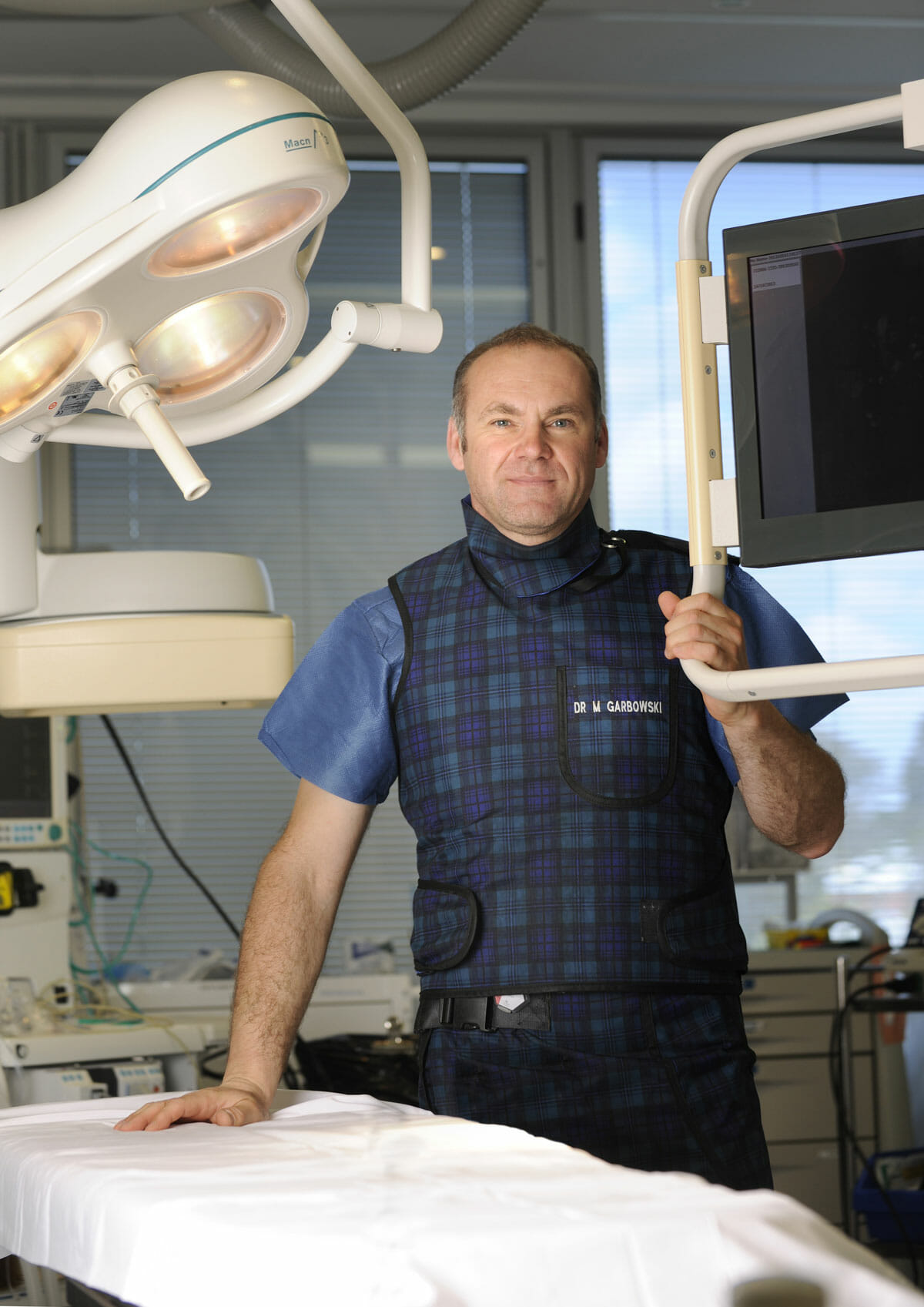
Dr Marek Garbowski has developed a strong clinical focus in the assessment and management of pelvic venous disorders, helping many women regain control of their lives after years of unexplained symptoms.
State-of-the-Art Assessment
Using the latest diagnostic imaging and vascular evaluation techniques, we ensure a thorough and accurate diagnosis. We work closely with gynaecologists and radiologists to deliver a multidisciplinary approach tailored to each patient’s needs.
Evidence-Based Treatment Options
Our clinic offers a full range of minimally invasive, image-guided treatment options — including embolisation of varicose pelvic veins, designed to relieve symptoms with minimal downtime.
Care for Public and Private Patients
Dr Garbowski provides consultations and procedures through both private practice and public hospital pathways, ensuring access to quality care for all patients.
Frequently Asked Questions
Medical compression stockings are specially designed garments that apply graduated pressure to the leg, with the greatest compression at the ankle reducing progressively towards the knee or thigh. They are used to improve venous return, reduce swelling, and manage chronic venous conditions.