
What is Endovascular Aortic Aneurysm Repair?
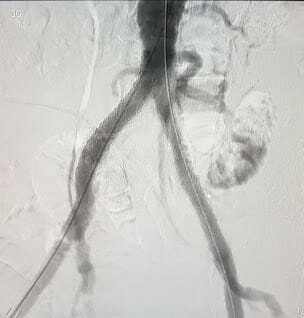
Endovascular aortic aneurysm repair (EVAR) is a minimally invasive technique for treating aortic aneurysms. Rather than opening the abdomen or chest, a stent-graft is guided through small incisions in the groin and positioned inside the aorta to seal off the aneurysm from the inside. The aneurysm sac is excluded from blood flow and the risk of it rupturing is removed.
Fenestrated and branched EVAR (FEVAR/BEVAR) are advanced versions of the procedure used when the aneurysm extends close to or involves the arteries supplying the kidneys. The stent-graft is custom-made with precisely positioned holes (fenestrations) or branches to allow blood to continue flowing to those arteries.
Which Conditions are Treated?
EVAR is most commonly used to treat abdominal aortic aneurysms (AAA) and thoracic aortic aneurysms (TAA). FEVAR/BEVAR are used for more complex aneurysms that cannot be treated with standard EVAR because of their position relative to the renal arteries. Both procedures can also be applied to peripheral aneurysms in selected cases.
How is the Procedure Performed?
The procedure is carried out in a specialised operating suite with advanced imaging equipment. Under general or regional anaesthetic, small incisions are made in both groins to access the femoral arteries. The stent-graft is introduced through these access points and carefully guided into position inside the aorta using real-time X-ray guidance. Once correctly placed, it is deployed to seal the aneurysm. The procedure typically takes two to four hours depending on complexity.
Benefits and Recovery
Compared with open aortic surgery, EVAR involves no large abdominal incision, less blood loss, a shorter intensive care stay, and a faster overall recovery. Most patients are walking the day after surgery and go home within two to three days. Most return to normal activities within two to four weeks.
Long-term surveillance with imaging is required to ensure the stent-graft remains in the correct position and the aneurysm continues to be excluded. Dr Garbowski will discuss whether EVAR, FEVAR or BEVAR is appropriate for your anatomy and will arrange all necessary follow-up.
Percutaneous Endovascular AAA Repair (EVAR)
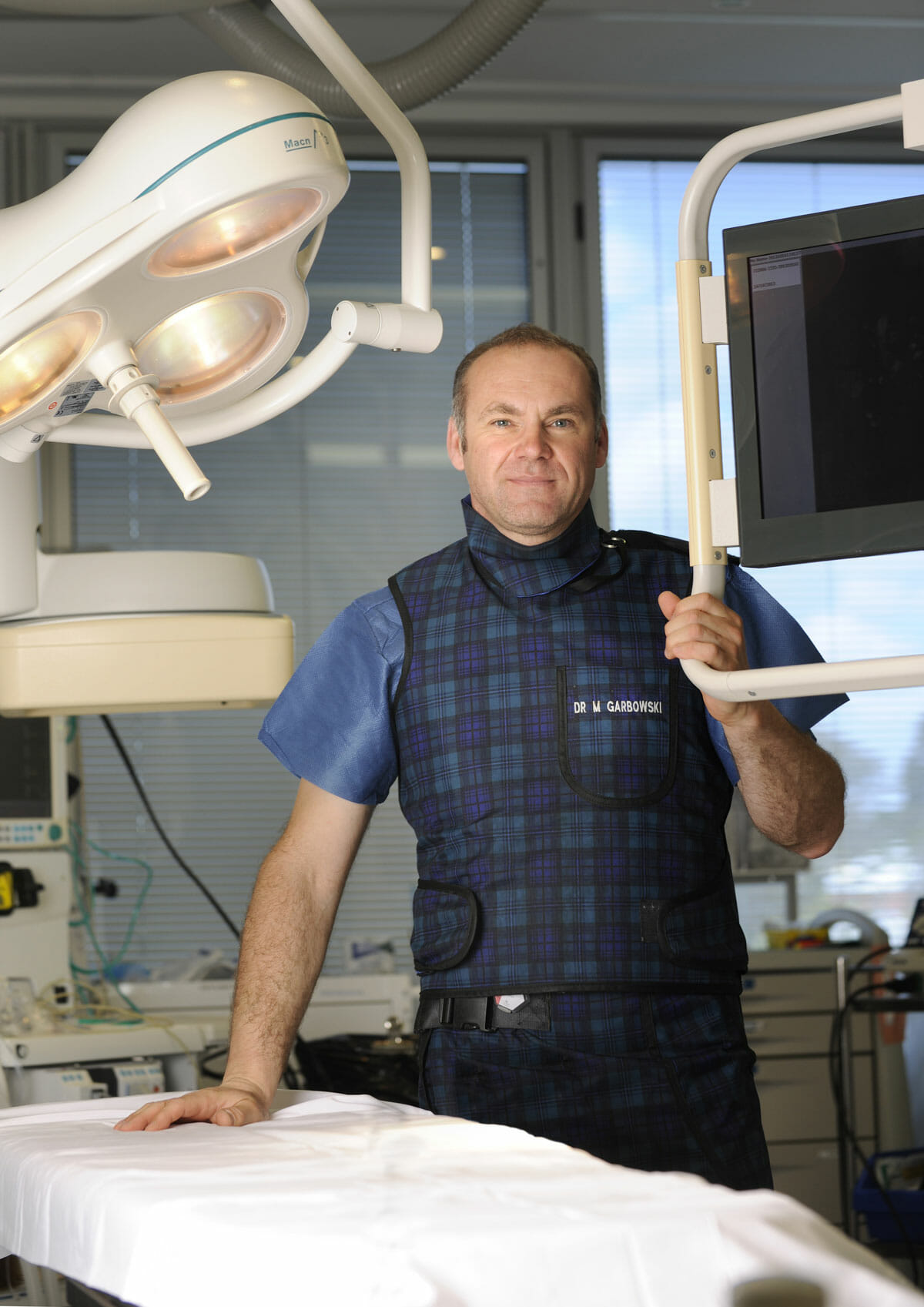
Dr Marek Garbowski at Perth Vascular Clinic offers percutaneous endovascular aneurysm repair (EVAR), a minimally invasive treatment for abdominal aortic aneurysms (AAA). Using small punctures in the groin rather than a large abdominal incision, a stent graft is guided through the blood vessels and positioned within the aorta to exclude the aneurysm from blood flow.
This advanced technique is associated with reduced postoperative pain, shorter hospital stays, faster recovery and lower complication rates compared with traditional open surgery for suitable patients. Dr Garbowski provides comprehensive assessment, treatment planning and long-term surveillance to ensure optimal outcomes.
Related Resources
Below are some of the Resources related to Endovascular Aortic Aneurysm Repair (EVAR/FEVAR/BEVAR).


Listen to the Latest Podcast
Listen to the latest podcast featuring Dr Marek Garbowski and Medical Forum, WA’s independent monthly publication for health professionals.
Get in Touch
Conditions we can treat with Endovascular Aortic Aneurysm Repair (EVAR/FEVAR/BEVAR)
Below are some of the conditions we can treat with Endovascular Aortic Aneurysm Repair (EVAR/FEVAR/BEVAR). Click on the below to learn more or get in touch with us to request a consultation.
Abdominal Aortic Aneurysms (AAA)
An abdominal aortic aneurysm is a bulging section of the main blood vessel running through your abdomen. Early detection is essential, as a large aneurysm can be life-threatening without timely specialist treatment.
Aortic Pathology – Penetrating Aortic Ulcers
Aneurysms are areas where blood vessels weaken and bulge outward. Whether in the chest, abdomen or peripheral arteries, early specialist care is the key to preventing life-threatening complications.
Peripheral Aneurysms
Peripheral aneurysms are bulges in arteries outside the aorta, most commonly behind the knee or in the groin. They can form blood clots that block circulation to your limbs, making timely treatment important.
Why Choose Perth Vascular Clinic?
Expertise You Can Trust
Dr Marek Garbowski has developed a strong clinical focus in the assessment and management of pelvic venous disorders, helping many women regain control of their lives after years of unexplained symptoms.
State-of-the-Art Assessment
Using the latest diagnostic imaging and vascular evaluation techniques, we ensure a thorough and accurate diagnosis. We work closely with gynaecologists and radiologists to deliver a multidisciplinary approach tailored to each patient’s needs.
Evidence-Based Treatment Options
Our clinic offers a full range of minimally invasive, image-guided treatment options — including embolisation of varicose pelvic veins, designed to relieve symptoms with minimal downtime.
Care for Public and Private Patients
Dr Garbowski provides consultations and procedures through both private practice and public hospital pathways, ensuring access to quality care for all patients.
Frequently Asked Questions
Endovascular aortic repair (EVAR) is a minimally invasive procedure to treat aortic aneurysms. A stent graft is delivered through small incisions in the groin arteries and positioned within the aorta under X-ray guidance, sealing off the aneurysm from the inside without the need for open abdominal surgery.