
What are Visceral Artery Aneurysms?
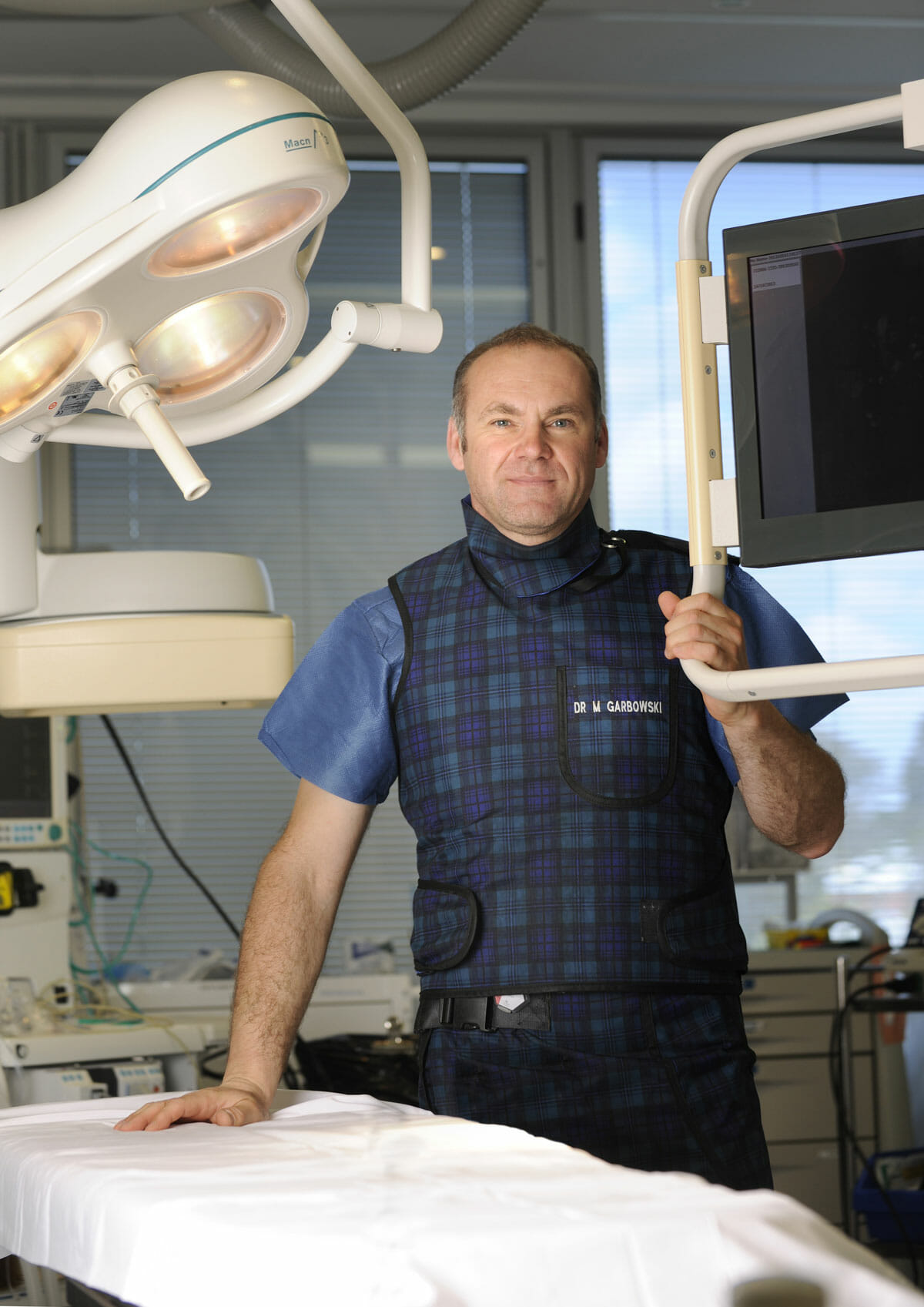
Dr Marek Garbowski at Perth Vascular Clinic provides advanced minimally invasive endovascular treatments for visceral artery aneurysms, including aneurysms of the splenic artery, renal artery, hepatic artery, mesenteric arteries and other branches supplying the abdominal organs.
A visceral artery aneurysm is an abnormal dilation or weakening of an artery that supplies blood to the abdominal organs. Although many aneurysms remain asymptomatic and are discovered incidentally during imaging studies, they can enlarge over time and carry a risk of rupture.
Uncommon, but potentially life-threatening
The risk of rupture varies depending on the artery involved, aneurysm size, growth rate and patient-specific factors such as pregnancy, portal hypertension or underlying vascular disease. Specialist assessment is recommended for any newly found visceral aneurysm.
Where Visceral Aneurysms Occur
Splenic artery aneurysms
The most common location. Most patients have no symptoms, although some develop upper abdominal or left-sided abdominal pain.
Potential complications
- Sudden rupture causing severe internal bleeding
- Haemodynamic instability and shock
- Increased rupture risk during pregnancy
- Progressive enlargement over time
Treatment is often recommended for
- Symptomatic or enlarging aneurysms
- Aneurysms above accepted size thresholds
Renal artery aneurysms
Affect the vessels supplying the kidneys and may be associated with hypertension, fibromuscular dysplasia or other vascular disorders.
Potential complications
- Rupture and internal haemorrhage
- Kidney infarction due to thromboembolism
- Progressive loss of kidney function
- Difficult-to-control hypertension
Treatment is considered when
- Aneurysms become symptomatic or enlarge significantly
- The risk of complications is increased
Other visceral aneurysms
Less commonly, aneurysms occur in the hepatic arteries, superior mesenteric artery, coeliac artery branches, gastroduodenal artery or pancreaticoduodenal arteries.
What to know
- Rarer, but may carry a substantial risk of rupture
- Symptoms can include abdominal pain or gastrointestinal bleeding
- Often entirely silent until complications develop
- Require careful specialist assessment
Endovascular Treatment
Modern endovascular techniques allow many visceral artery aneurysms to be treated without open surgery. Through a small puncture in the groin or wrist artery, specialised catheters are navigated under X-ray guidance to the aneurysm.
Benefits of the endovascular approach
- Minimally invasive approach
- Reduced postoperative pain
- Shorter hospital stay
- Faster recovery
- Lower procedural morbidity than open surgery in suitable patients
Coil embolisation
One of the most commonly performed treatments for visceral artery aneurysms. Using advanced imaging guidance, tiny platinum coils are precisely placed within the aneurysm sac or affected artery. The coils promote clot formation, preventing blood flow into the aneurysm and significantly reducing the risk of rupture.
Particularly effective for
- Splenic artery aneurysms
- Peripheral visceral artery aneurysms
- Pseudoaneurysms
- Selected branch vessel aneurysms
Stent-assisted coil embolisation
For aneurysms involving important arteries where preserving blood flow is essential. A specially designed stent is deployed across the aneurysm neck, creating a scaffold that allows coils to be safely placed in the aneurysm while blood keeps flowing through the parent artery, combining durable aneurysm exclusion with preserved organ perfusion.
Particularly useful for
- Wide-necked aneurysms
- Renal artery aneurysms
- Hepatic artery aneurysms
- Complex visceral aneurysm anatomy
What to Expect
Assessment and imaging
Each patient undergoes detailed assessment with advanced imaging to confirm the aneurysm, measure it and determine the most appropriate treatment strategy.
Minimally invasive procedure
Through a small puncture in the groin or wrist, the catheter is guided to the aneurysm and the coils, with or without a stent, are placed under X-ray guidance. No open incision is required.
Recovery
Compared with open surgery, patients typically experience less pain, a shorter hospital stay and a faster return to normal activities.
Ongoing surveillance
Follow-up imaging confirms long-term aneurysm exclusion and preservation of organ function.
Expertise at Perth Vascular Clinic
Dr Marek Garbowski provides comprehensive evaluation and minimally invasive treatment of visceral artery aneurysms using state-of-the-art endovascular techniques. His goal is to provide effective, durable treatment while minimising recovery time and enabling patients to return to normal activities as quickly as possible.
- Detailed assessment with advanced imaging
- Coil and stent-assisted coil embolisation
- Preservation of organ blood supply
- Structured long-term surveillance
This information is provided for general educational purposes and does not replace individual medical assessment. Please consult your GP or a vascular specialist for advice specific to your circumstances.
Related Resources
Below are some of the Resources related to Endovascular Treatment of Visceral Artery Aneurysms.

Listen to the Latest Podcast
Listen to the latest podcast featuring Dr Marek Garbowski and Medical Forum, WA’s independent monthly publication for health professionals.
Get in Touch
Conditions we can treat with Endovascular Treatment of Visceral Artery Aneurysms
Below are some of the conditions we can treat with Endovascular Treatment of Visceral Artery Aneurysms. Click on the below to learn more or get in touch with us to request a consultation.
Why Choose Perth Vascular Clinic?
Expertise You Can Trust
Dr Marek Garbowski has developed a strong clinical focus in the assessment and management of pelvic venous disorders, helping many women regain control of their lives after years of unexplained symptoms.
State-of-the-Art Assessment
Using the latest diagnostic imaging and vascular evaluation techniques, we ensure a thorough and accurate diagnosis. We work closely with gynaecologists and radiologists to deliver a multidisciplinary approach tailored to each patient’s needs.
Evidence-Based Treatment Options
Our clinic offers a full range of minimally invasive, image-guided treatment options — including embolisation of varicose pelvic veins, designed to relieve symptoms with minimal downtime.
Care for Public and Private Patients
Dr Garbowski provides consultations and procedures through both private practice and public hospital pathways, ensuring access to quality care for all patients.
Frequently Asked Questions
A visceral artery aneurysm is an abnormal dilation or weakening of one of the arteries supplying the abdominal organs, such as the splenic, renal, hepatic or mesenteric arteries. Many cause no symptoms and are found incidentally on imaging, but they can enlarge over time and carry a risk of rupture.